Leonardo AI Review
Leonardo AI is worth it for custom model training and sketch-to-image control, not for one-click speed. My tested verdict, plus its Canva ownership since 2024.
We may earn a commission when you buy through links on this page. It never changes what we recommend, and the price you pay is the same either way. How we make money
Leonardo AI is worth it if you want more control over the creative process than a plain prompt box gives you: custom model training, real-time sketch-to-image, and a standalone web interface. Not if you just want the fastest one-click result.
Is Leonardo AI Worth It?
Leonardo AI is worth it if you want more control over the creative process than a plain prompt box gives you: custom model training, real-time sketch-to-image, and a standalone web interface. Not if you just want the fastest one-click result. In my testing, Leonardo asks more of you than a chat-based generator, and gives more back in return. This review covers what's changed recently, starting with a corporate relationship most coverage still misses.
What Leonardo AI Actually Does Well
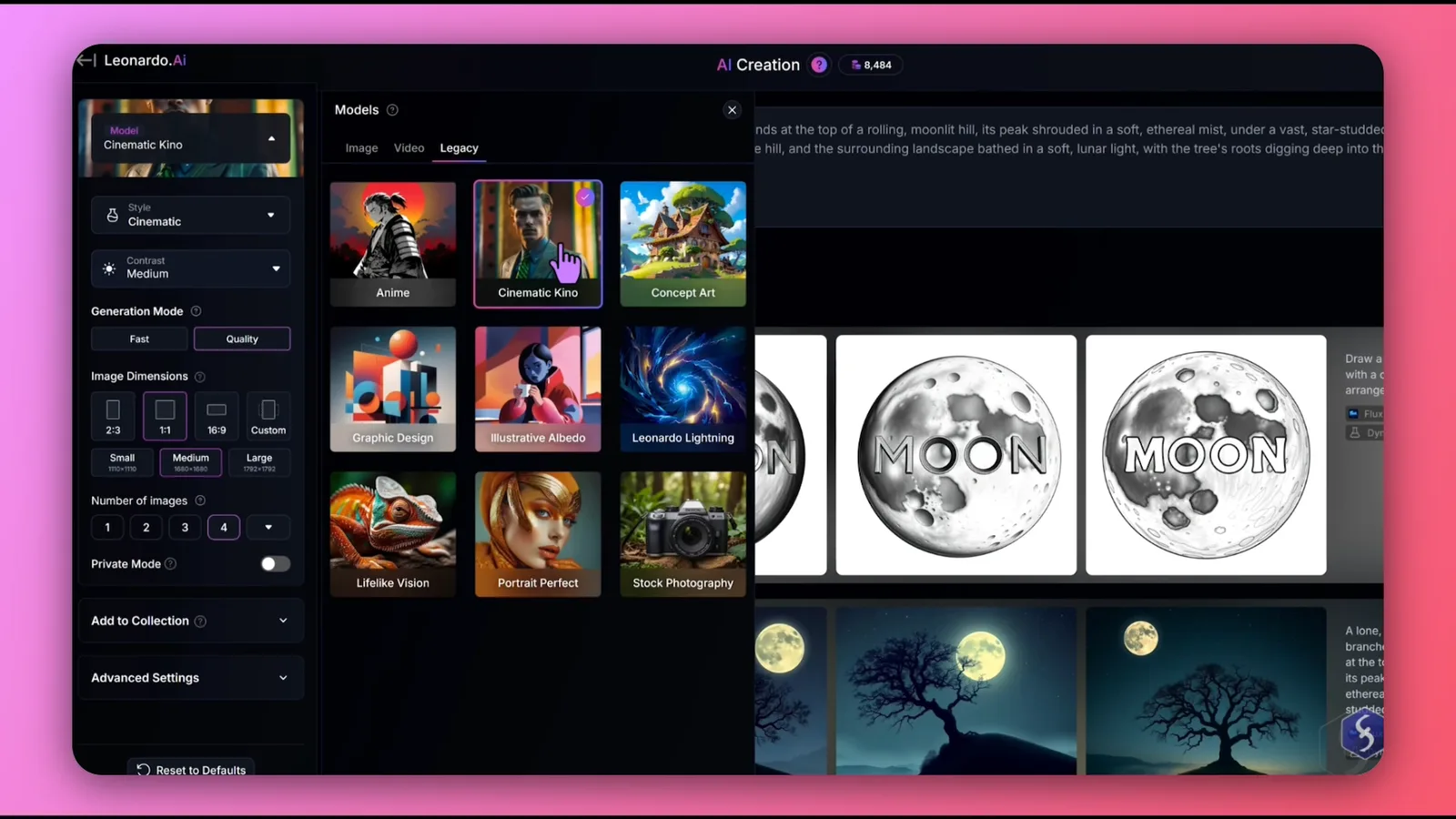
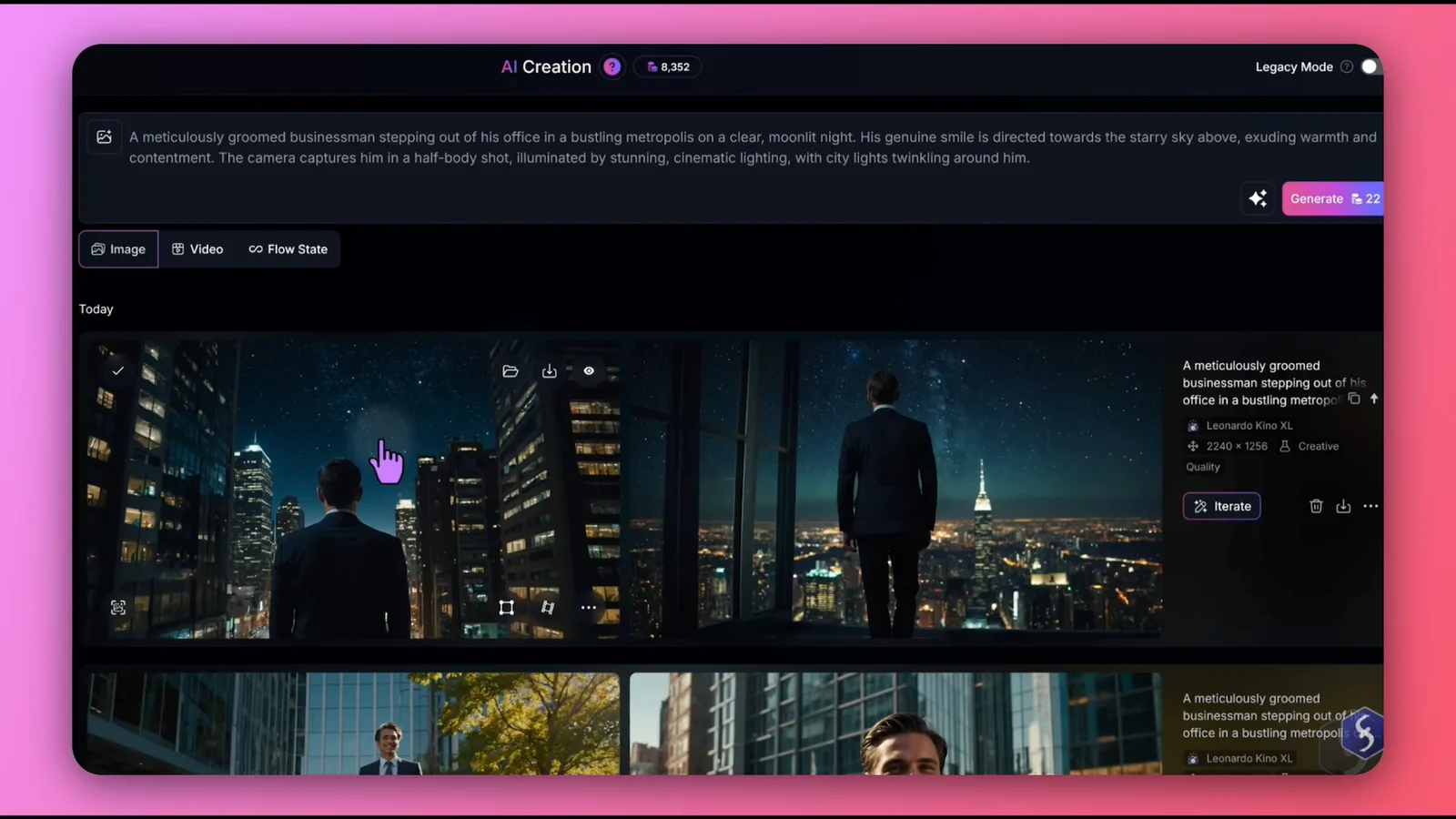
Leonardo AI's biggest strength is real creative control instead of a black box. Real-Time Canvas lets you sketch a rough composition and watch the AI render detail over it live. Custom model training lets you upload 10-20 images of a product, character, or brand style and generate new scenes that match it consistently, a real solution to the brand-consistency problem that plagues prompt-only tools. All of this runs through a dedicated, standalone web dashboard rather than a chat interface, with commercial usage rights included even on the free tier.
Leonardo AI Pricing, Verified
I checked directly against Leonardo's own pricing page on 2026-09-02, and it lines up cleanly:
| Plan | Price | Fast Tokens/mo | Token Bank |
|---|---|---|---|
| Free | $0 | 150/day | 150 |
| Essential | $12/mo | 8,500 | 25,500 |
| Premium | $30/mo | 25,000 | 75,000 |
| Ultimate | $60/mo | 60,000 | 180,000 |
Two things live on the pricing page that most coverage misses. First, a Token Bank mechanic: unused tokens roll over up to three times your monthly allotment instead of simply expiring. Second, two dedicated Team plans (Starter at $72/mo, $24/seat, and Growth at $144/mo, $48/seat) with shared token pools and per-seat pricing, alongside a pay-as-you-go API option. If you're pricing Leonardo for a small team rather than solo use, that path is worth checking directly, since it's easy to miss.
The Model Roster Has Grown Into a Marketplace
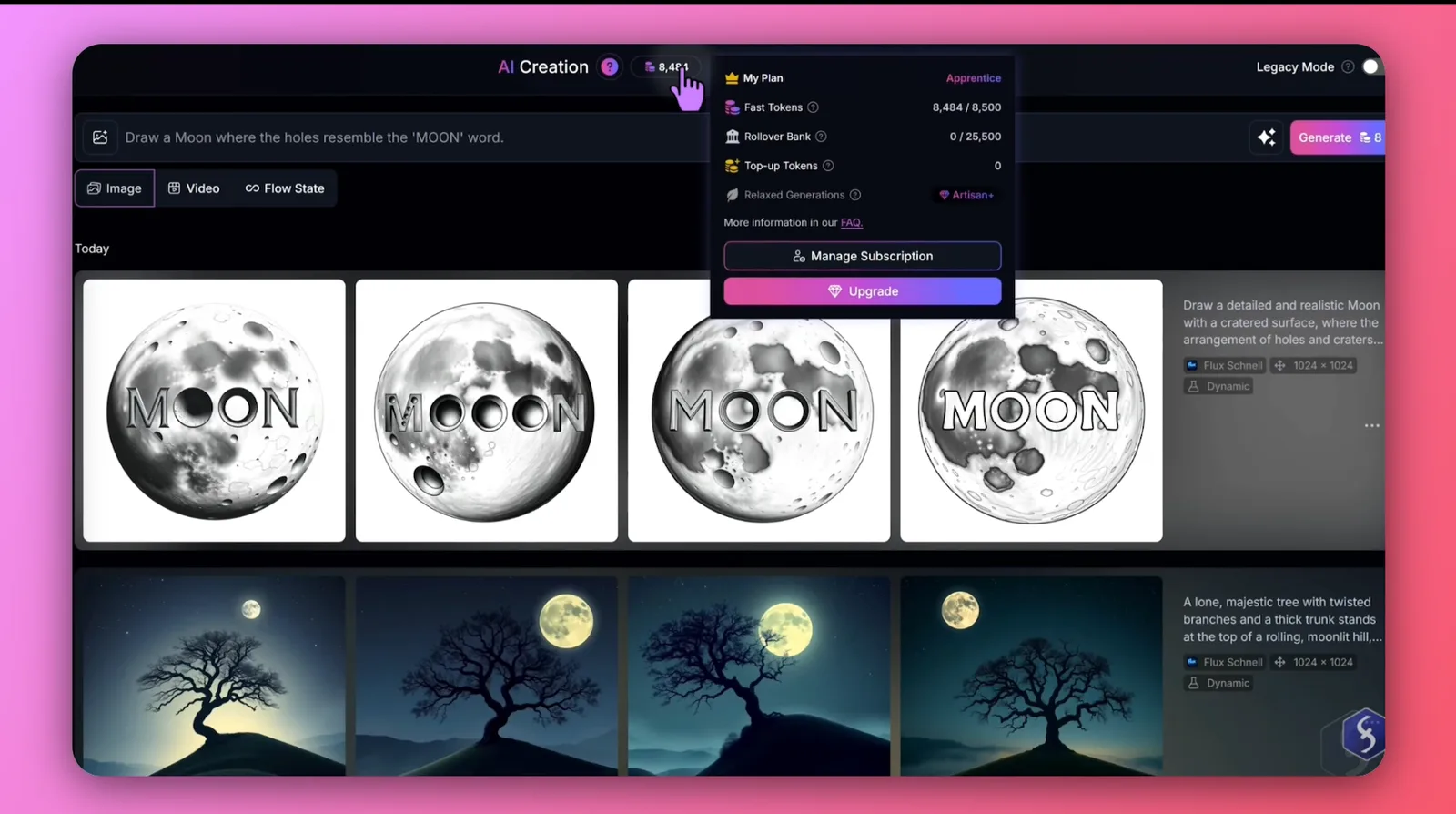
I checked live: Leonardo's current "unlimited relaxed generation" list includes its own Lucid Origin, Lucid Realism, and Phoenix models, plus third-party models: Hailuo 2.3 (MiniMax) and Wan 2.6 (Alibaba). piclumen.com's July 2026 hands-on test independently confirms using FLUX.2 Pro (Black Forest Labs) inside Leonardo for a portrait generation. digioffly.com's March 2026 piece, by contrast, names only Kino XL, Vision XL, and Phoenix as Leonardo's models, an incomplete list for a review claiming comprehensive current testing. Leonardo isn't just a platform for its own models anymore. It's become a marketplace aggregating models from multiple vendors, similar to how some competing video tools in this space now operate.
Leonardo Has Been Part of Canva Since 2024
Only one of three published reviews mentions that Canva announced acquiring Leonardo in July 2024 (piclumen.com, the most recent), with Leonardo continuing to develop its own web platform independently. cnet.com's review is dated June 2024, one month before that announcement, so its silence on the acquisition is just a timing fact. digioffly.com's piece, published March 2026, nearly two years after the acquisition, never mentions Canva ownership at all, despite presenting itself as a comprehensive, current 2026 review. digioffly.com also uses the same section structure, tone, and byline (Alex Wright) as the source already flagged on this site's own Midjourney review for reading as templated rather than tool-specific, a pattern worth factoring in when weighing its specific claims, like a stated 4.8/5 rating or a "95% first-try success rate" figure with no described methodology. For context on the other half of Canva's AI lineup, my Canva AI review covers Magic Studio (Canva's in-house AI features) as a separate, sibling product rather than a competitor to Leonardo.
Where It Still Falls Short
The token economy is a real point of friction in my testing: different actions cost different, sometimes unintuitive amounts, and video generation in particular can drain a lower-tier plan's monthly allowance in a single clip. Complex scenes still produce artifacts. piclumen.com's hands-on test found skin texture and eyelash rendering issues on a close-up portrait, and inconsistent shadow direction on an otherwise strong product shot. The sheer number of models, presets, and settings is a real learning curve for anyone who wants a fast, simple result rather than to tune details.
Who Leonardo AI Is For / Not For
For:
- Designers, YouTubers, and agencies who need editable, brand-consistent output via custom model training
- Anyone who wants Real-Time Canvas-style sketch-to-image control rather than pure text prompting
- Teams evaluating a shared token pool across multiple seats
Not for:
- Anyone who wants the fastest possible one-click result with minimal decisions
- Heavy video generators on a lower-tier plan, where tokens disappear fast
- Users expecting flawless complex-scene output without any retouching
Where This Fits in the Wider AI Image Toolkit
Leonardo AI sits in the AI Image Tools section. It pairs with the Canva AI review: the two are sibling products under the same parent company, not competitors, since Canva acquired Leonardo in 2024.
Frequently asked questions
Is Leonardo.Ai safe to use?
Leonardo's terms of service allow using your content to improve its services via machine learning on free-tier, public generations, a real privacy consideration that's easy to miss in the signup flow. Paid plans keep generations private.
Is Leonardo.Ai really free?
Yes, with real limits: the free plan gives 150 fast tokens per day, enough for roughly a dozen or more standard image batches, but generations are public and advanced tools like Alchemy Refiner are gated behind paid plans.
Which is better, Leonardo.Ai or Midjourney?
It depends on what you're optimizing for. In my testing, Midjourney still edges ahead on raw, out-of-the-box cinematic aesthetic with less effort. Leonardo pulls ahead when you want structured control: custom model training, sketch-to-image, and a standalone editing workflow rather than a chat interface.
Ready to try Leonardo AI?
We may earn a commission when you buy through links on this page. It never changes what we recommend, and the price you pay is the same either way. How we make money
(keep reading)
Mobbin Review
Mobbin Alternatives
Aragon AI Review
Get the AI tool roundup.
One email a week: what launched, what is actually worth paying for, and what to cancel. No hype, no spam.
Unsubscribe any time. We never sell your email.